
Managing digital risk and staying compliant with regulations is now essential for businesses in India. With strict rules from the DPDP Act 2023, RBI TPRM, SEBI, and global standards such as SOC 2 Type II and PCI DSS v4.0.1, companies can’t rely on scattered spreadsheets or one-off security checks anymore.
Working with leading cybersecurity and GRC firms in India helps protect your business, avoid costly penalties, and open doors to global deals. This guide covers India’s cybersecurity and GRC environment, key regulations, and explains how KavachOne combines expert advice with automation tools to keep you ready for audits.
What Is GRC and Why Is It Critical for Indian Enterprises?
Governance, Risk, and Compliance (GRC) is an integrated management strategy designed to align an organization's IT and corporate governance with business objectives, manage digital and operational risk, and meet statutory and industry compliance mandates.
Governance: Establishing leadership structures, accountability, and policy oversight across IT infrastructure.
Risk Management: Proactively discovering vulnerabilities, quantifying threat likelihood, and implementing technical controls.
Compliance: Compliance with the relevant statutory frameworks (DPDP Act, CERT-In, RBI) and global certifications (ISO 27001, SOC 2, PCI DSS).
With India’s CERT-In mandating 6-hour incident reporting and strict 180-day log retention rules, manual tracking inevitably breaks down. Organizations require integrated GRC frameworks that combine technical offensive security with systematic compliance advisory and automation.
Key Regulatory Frameworks Shaping India’s Compliance Landscape
Every organization that has customer data, financial data, or data moving across borders in India has to deal with a very specific set of regulatory requirements:
Framework / Regulation | Governing Authority / Body | Scope & Mandate |
DPDP Act 2023 | Data Protection Board of India | Mandates explicit consent, purpose limitation, DPO appointment, and financial penalties up to ₹250 crore for major personal data breaches. |
PCI DSS v4.0.1 | PCI Security Standards Council (SSC) | Mandatory technical and operational baseline for entities that store, process, or transmit cardholder data. |
SOC 2 (Type I & Type II) | AICPA | Evaluates controls across Security, Availability, Processing Integrity, Confidentiality, and Privacy for SaaS and cloud service providers. |
ISO 27001:2022 / ISO 27701 | ISO / IEC | Standard for building, operating, and improving an Information Security Management System (ISMS) and Privacy Information Management System (PIMS). |
RBI Cyber Security & TPRM | Reserve Bank of India | Strict baseline controls and Third-Party Risk Management guidelines for banks, NBFCs, and fintech payment aggregators. |
CERT-In Directions | MeitY | Mandatory reporting of specified cyber incidents within 6 hours and maintaining secure ICT system logs for 180 days. |
Evaluating the Top Cybersecurity & GRC Firms in India
India’s enterprise security ecosystem comprises three distinct categories of service providers:
1. Large System Integrators (TCS, Wipro, Infosys)
Global IT consulting firms like Tata Consultancy Services (TCS), Wipro, and Infosys focus on long-term, hybrid-cloud security projects and large-scale managed SOC deployments. But their complex processes and high costs often don’t suit fast-moving mid-market firms, fintechs, or tech startups that need quick audit certification.
2. Big 4 Accounting & Advisory Networks
The Big 4 advisory firms provide strong corporate governance and risk consulting. They work well for large institutional audits, but their advice is often high-level. Internal engineering and DevOps teams may not get the hands-on help they need for technical issues.
3. Specialized Cybersecurity & GRC Consultancies: The Hybrid Leader
Specialist firms fill the gap by bringing together top-tier consulting/advisory with specialist compliance tooling. They provide hands-on technical testing (VAPT, cloud hardening, etc.), audit defense, and appropriate modern automation software to meet both Indian and international requirements.
KavachOne: Full-Stack Cybersecurity & GRC Solutions
KavachOne stands at the forefront of the top cybersecurity & GRC firms in India by delivering a complete ecosystem of hands-on professional consulting services backed by proprietary compliance automation tools and software. Rather than acting merely as an automated platform or an external auditor, KavachOne operates as an embedded partner to secure your digital infrastructure and guarantee audit readiness.
KavachOne’s Comprehensive Consulting Services
KavachOne’s certified security practitioners, CISAs, and privacy attorneys lead hands-on implementation across key domains:
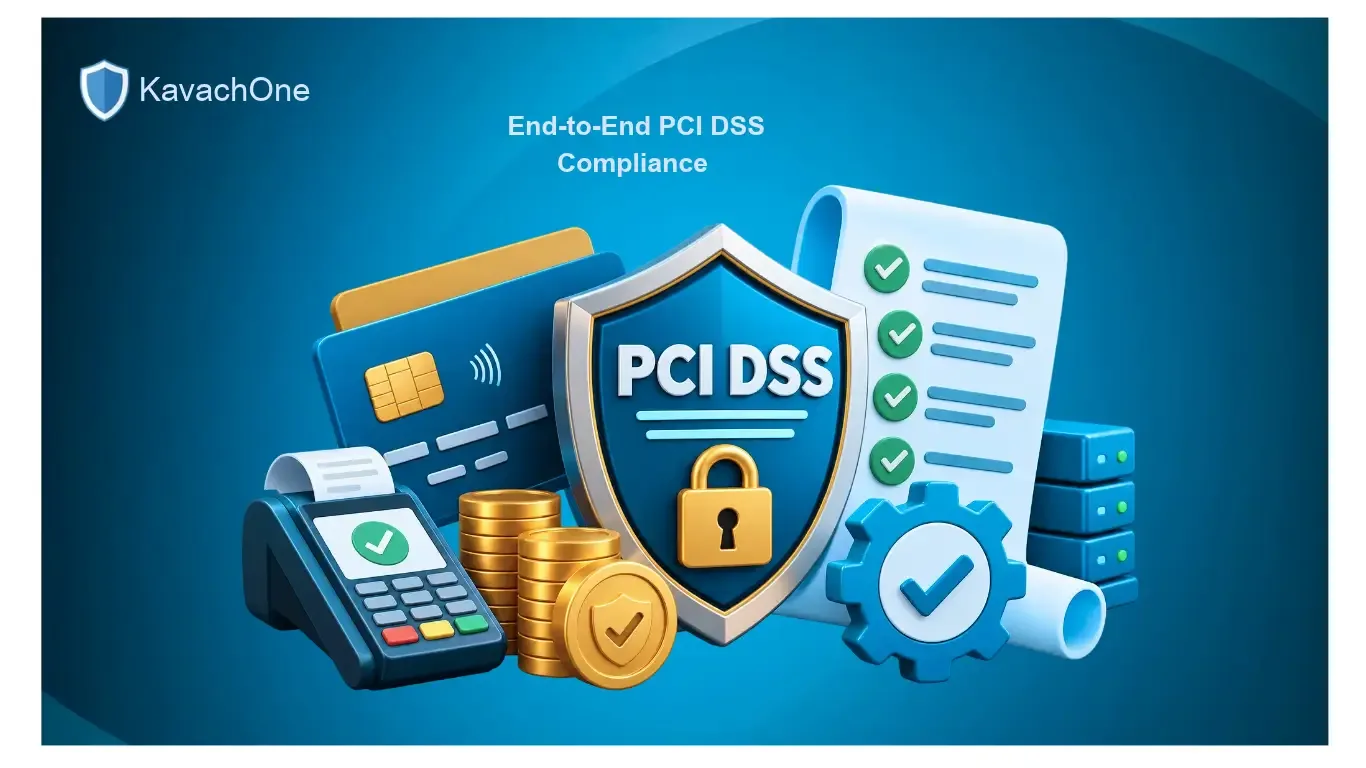
1. Official PCI DSS Qualified Security Assessor (QSA) Services
As an accredited PCI DSS QSA company, KavachOne offers scope reduction, gap assessments, architecture checks, remediation advice, and issues official Reports on Compliance (RoC) and Attestations of Compliance (AoC).
2. SOC 1 & SOC 2 (Type I & Type II) Attestation
KavachOne helps B2B SaaS and fast-growing tech companies by setting up Trust Services Criteria, automating evidence collection, working with independent CPAs, and guiding engineering teams through audits.
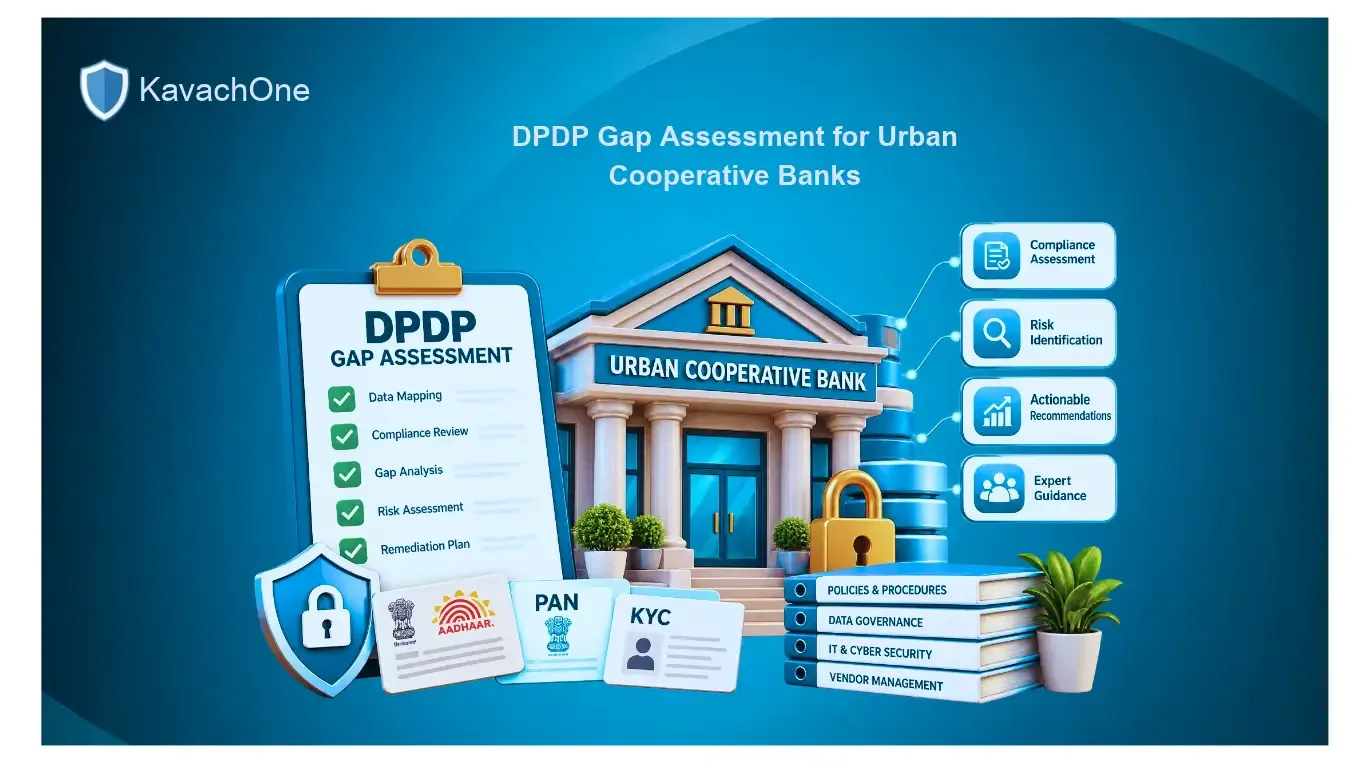
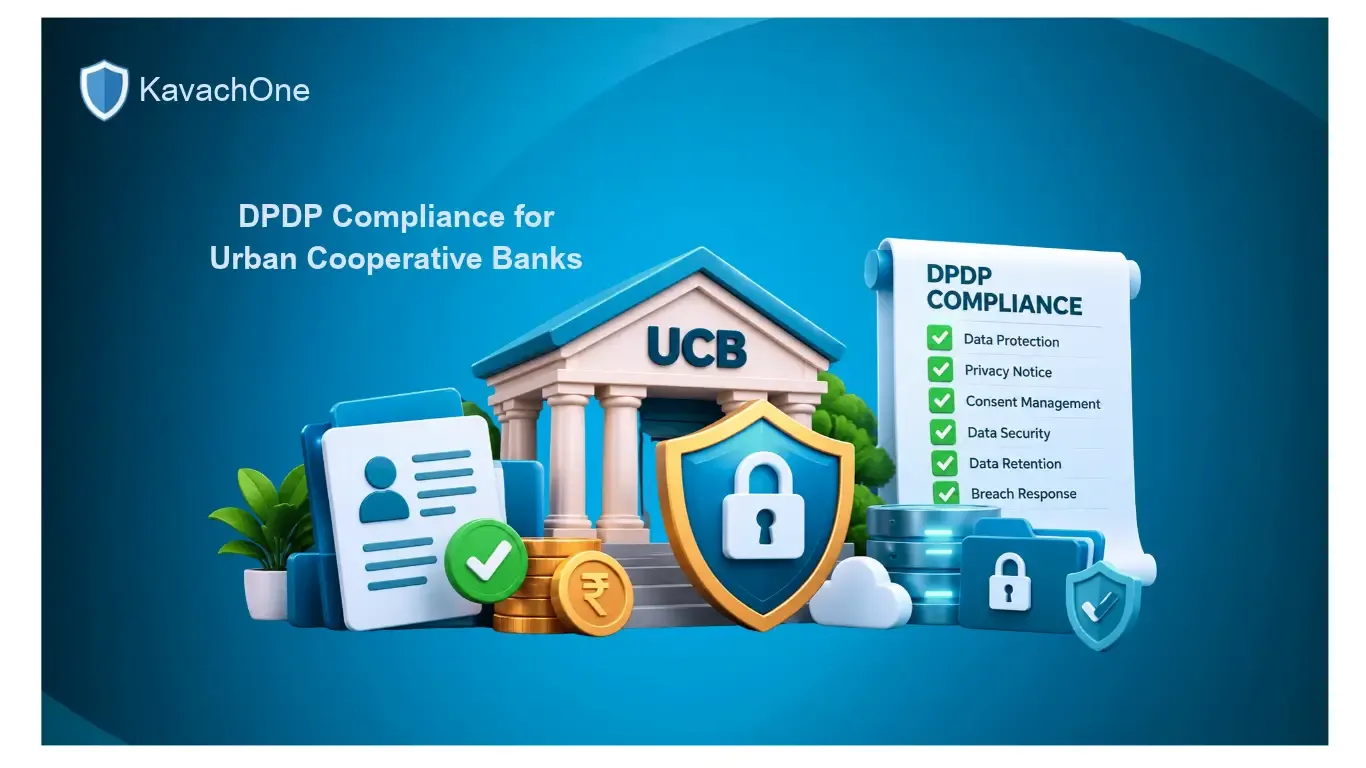
3. DPDP Act 2023 Implementation & Data Privacy Consulting
From readiness audits to ongoing privacy engineering, providing complete DPDP compliance:
Data discovery, personal data flow mapping, and record-keeping.
Preparation of privacy policies, consent notices, and child data processing controls.
Formulation of standard operating procedures for Data Subject Access Requests (DSARs) and rapid breach notification.
DPO-as-a-Service: Fractional Data Protection Officer advisory to handle regulatory notices and consumer grievances.
4. ISO Compliance & Certification (ISO 27001, 27701, 42001)
End-to-end advisory to build, maintain, and audit Information Security Management Systems (ISMS), Privacy Information Management Systems (PIMS), or AI Management Systems (ISO 42001). They handle pre-audits, internal control checks, and both stages of external certification audits.
5. Technical Cybersecurity Audits & VAPT
Certified ethical hackers test your attack surface using industry-standard OWASP, NIST, and PTES methodologies:
Web & Mobile Application VAPT: Source-code review, API testing, and runtime business logic assessments.
Cloud Infrastructure Security: Configuration and permission review across AWS, Microsoft Azure, and Google Cloud Platform.
Network Penetration Testing: Internal and external vulnerability scans, firewall audits, and wireless network security evaluations.
KavachOne’s Proprietary GRC & Compliance Tools
To eliminate the inefficiencies of manual evidence tracking, KavachOne equips enterprise clients with integrated software solutions:
1. ComplyXpert (Unified Compliance Management System)
KavachOne’s flagship GRC software centralizes multi-framework compliance management into a single interface:
Multi-Standard Mapping: Map single security controls across 30+ frameworks (DPDP, ISO 27001, SOC 2, PCI DSS, RBI, SEBI, HIPAA) to prevent duplicative work.
AI-Driven Risk Engine: Continuous risk scoring, gap alerts, and policy versioning workflows.
Audit-Ready Evidence Vault: Centralized repository for logs, configurations, and policy acknowledgments with role-based access.
2. ConsentiQo (Enterprise DPDP Consent Management Platform)
A specialized consent management platform purpose-built for India’s DPDP Act:
Multi-lingual consent banner and notice management across web and mobile platforms.
Immutable, audit-verifiable consent logging and withdrawal processing.
Automated Data Subject Access Request (DSAR) intake, verification, and resolution portal.
3. PII & CDD Scanners
PII Scanner: Automated discovery tool that scans databases, file systems, and cloud storage to locate and classify unencrypted personally identifiable information.
CDD Scanner: Customer Due Diligence automation engine facilitating risk-based identity verification, screening, and anti-money laundering compliance.
4. Privacy Suite & DPIA Software
Privacy Suite (DPDP): A centralized governance portal for managing Records of Processing Activities (RoPAs), retention schedules, and data lifecycle policies.
DPIA Automation Software: A structured workflow tool for conducting, documenting, and reviewing Data Protection Impact Assessments before releasing new high-risk software features.
5. Vendor Risk Management (TPRM) Software
Automates third-party risk assessments, vendor security questionnaires, compliance certificate monitoring, and vendor risk tiering in alignment with RBI and SEBI mandates.
Secure Your Business and Pass Audits with KavachOne
Compliance shouldn't slow down enterprise momentum. Partner with one of India's top cybersecurity and GRC firms to protect your critical systems, earn client trust, and streamline your path to global certifications.
Ready to evaluate your security and compliance readiness? Request a Free GRC Gap Assessment with KavachOne Today or reach out directly to info@kavachone.com
Frequently Asked Questions (FAQs)
KavachOne Editorial Team
Cybersecurity & Compliance Experts